How to chat with strangers online safely: 10 habits that protect you
Chatting with strangers can be fun and even help you feel less alone. These 10 simple habits keep your identity, your money and your peace of mind safe.
DiffWeb TeamPrivacy and safety
Talking to someone you have never met can be surprisingly good. People often find it easier to be honest with a stranger than with friends, and a good conversation with someone on the other side of the world can make a bad day better.
It also comes with real risks: people who are not who they say they are, scams, and people who try to find out who you are. You do not need to be paranoid. You need a few habits.
1. Keep a chat name that is not your real name
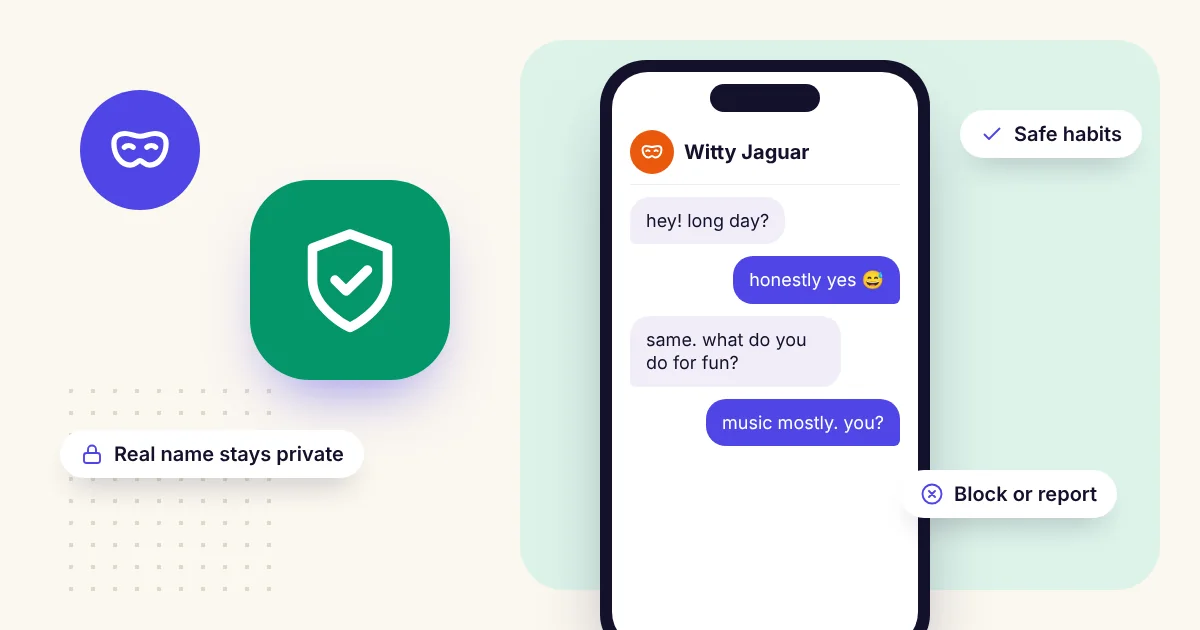
Use a name that has nothing to do with you: not your first name, not your Instagram handle, not your gamer tag. If someone can search your chat name and find you somewhere else, it is not anonymous.
2. Never share the details that identify you
That means your full name, phone number, home or school address, workplace, and the names of people close to you. Small details add up too: "I work at the only café near the station" can be enough.
3. Be careful with photos
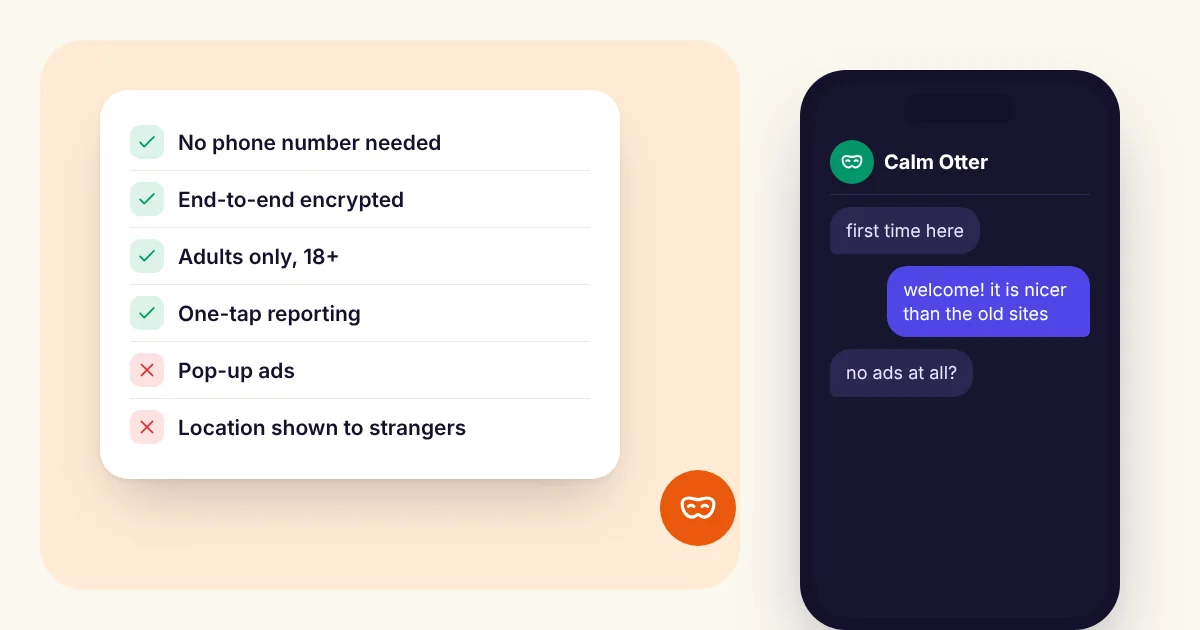
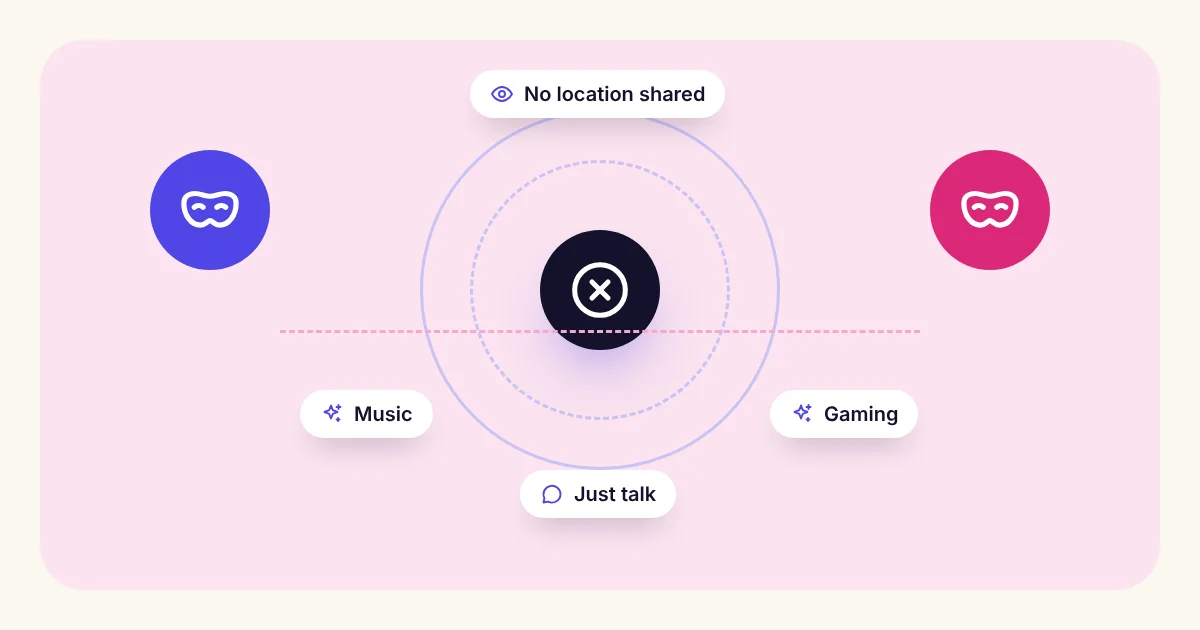
Photos can say more than you think: a street sign through a window, a school uniform, a reflection. Photos taken on phones can also carry hidden location data. On DiffWeb, photos are rebuilt before they are sent so that hidden location data is removed, but nothing can remove what is visible in the picture itself.
4. Move to another app only when you are sure
A common trick is to move you quickly to an app where you have to show your phone number. Take your time. If someone pushes hard to "continue on WhatsApp" or another app in the first few minutes, treat it as a warning sign.
5. Money requests are always a scam
Gift cards, crypto, "help with a hospital bill", an investment that "can't lose": if a stranger you met online asks for money, it is a scam. Every time. Stop replying.
6. Watch out for pressure and flattery
Scammers and manipulative people often move very fast: intense compliments, a sad story, urgency, secrecy. A real person is fine with going slowly.
7. Do not send anything you would not want shared
Once you send a photo or message, the other person can screenshot it. Encryption protects your messages from outsiders and from the service itself, but it cannot stop the person you are talking to from sharing what you sent.
8. Use the tools: block, report, leave
You never owe a stranger a conversation. If someone makes you uncomfortable, leave the chat. If they break the rules, report them. On DiffWeb you can report a message in one tap, and the report includes verified proof of what was said, so it cannot be faked or denied.
9. Prefer chats that do not keep everything forever
A chat that deletes itself leaves less behind if a device is lost or an account is broken into. That is why DiffWeb's temporary rooms close and delete themselves after 15 minutes, 1, 6 or 24 hours.
10. Trust the feeling that something is off
If a conversation starts to feel wrong, it is OK to stop without explaining. Your gut is a good safety tool.
If something has already gone wrong
If someone is threatening you, blackmailing you or asking for money, do not pay and do not keep negotiating. Save evidence, block them, report them, and talk to someone you trust. If you are in danger, contact your local emergency number. Our safety page explains how reporting works on DiffWeb.